Panky
Components: Illustration, Printmaking, Textile Design, Pattern Design, Book Design, Sex Education, Research

Overview
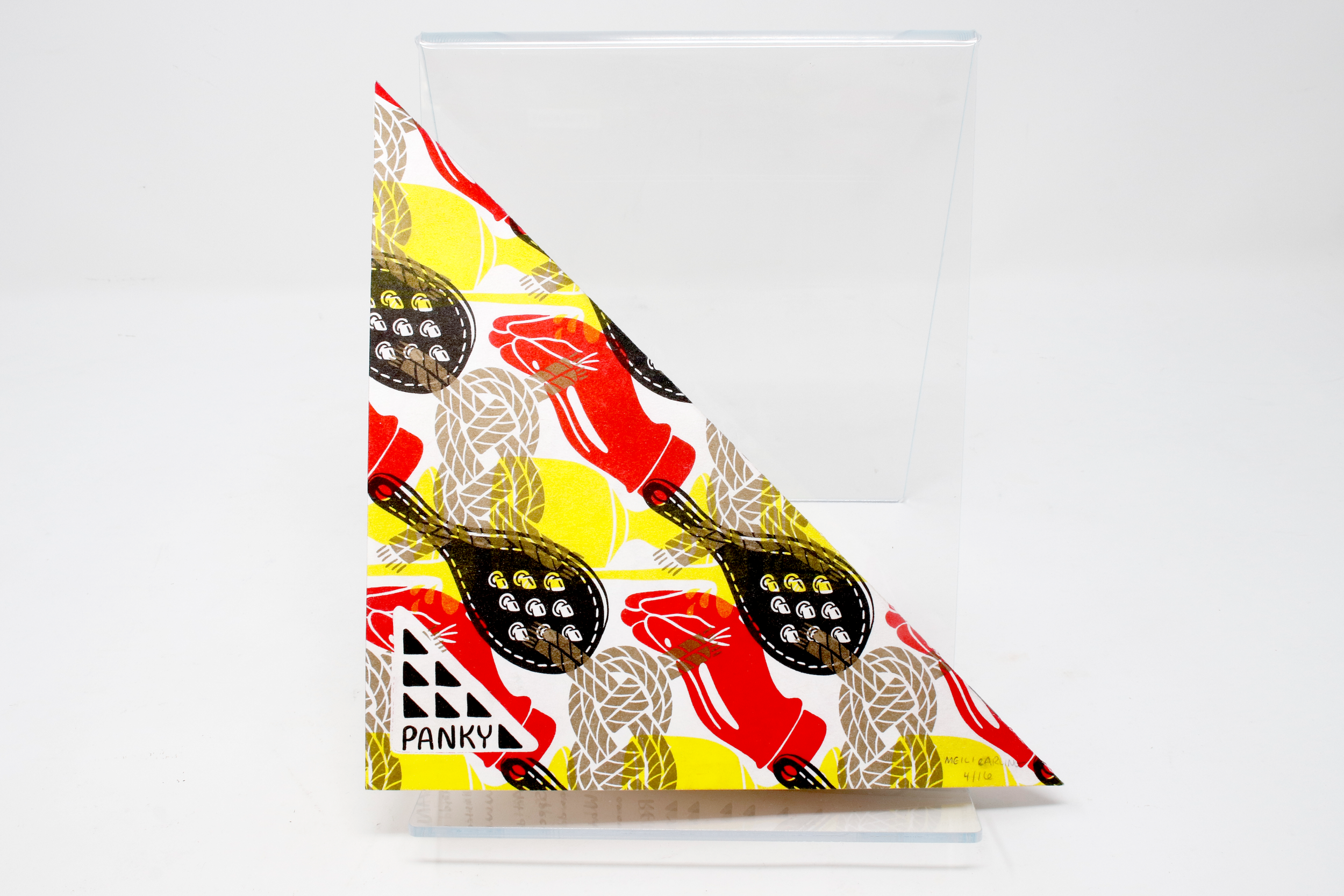
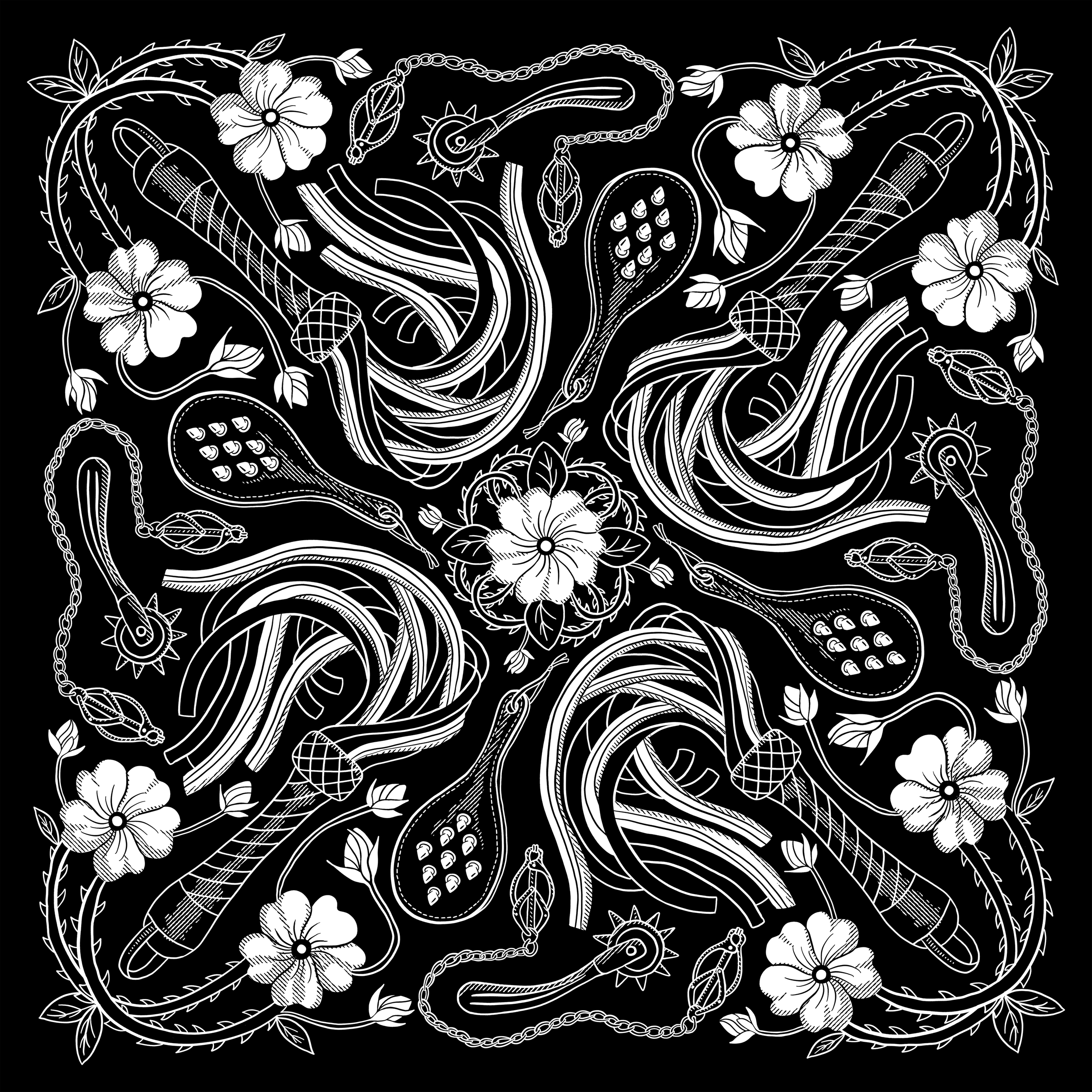
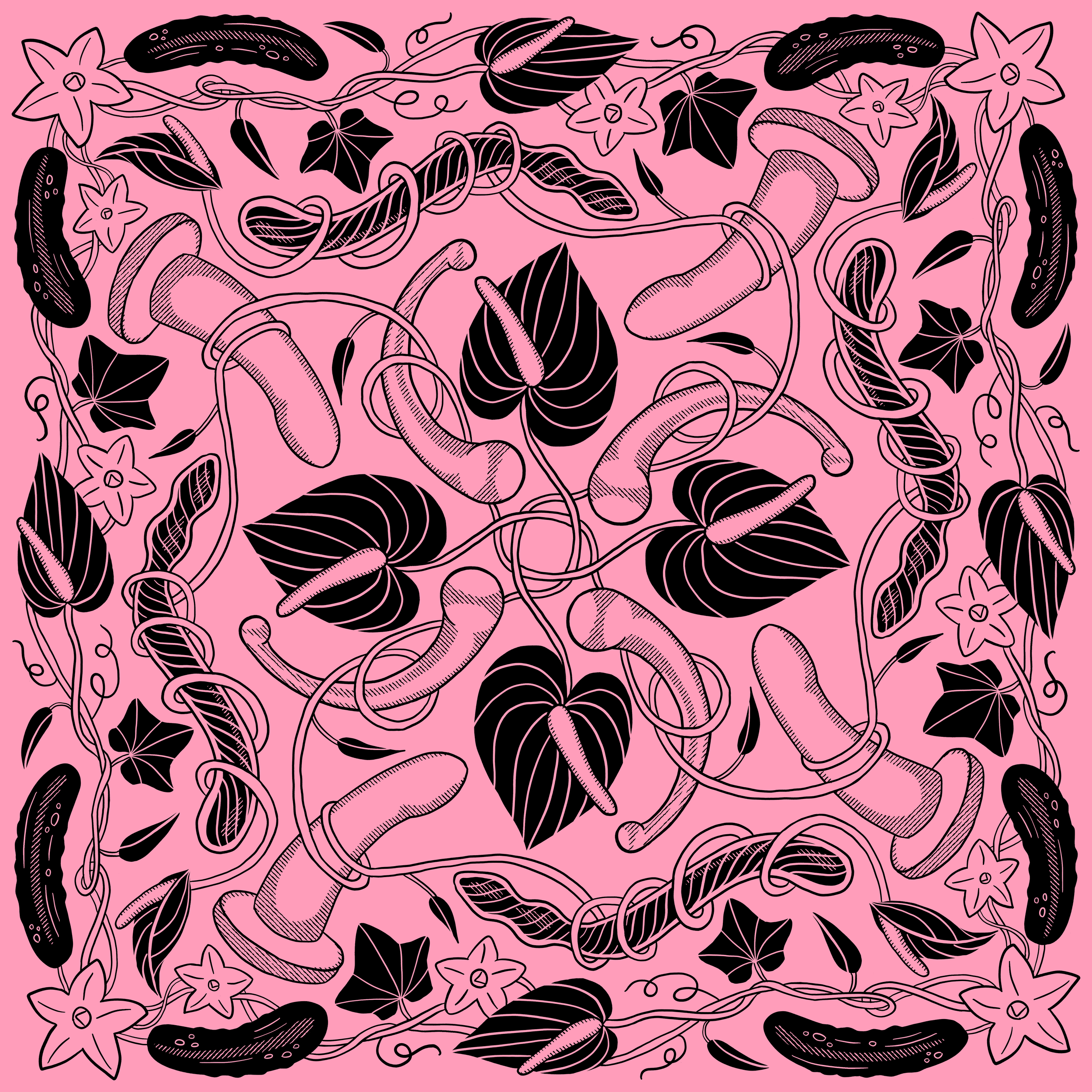
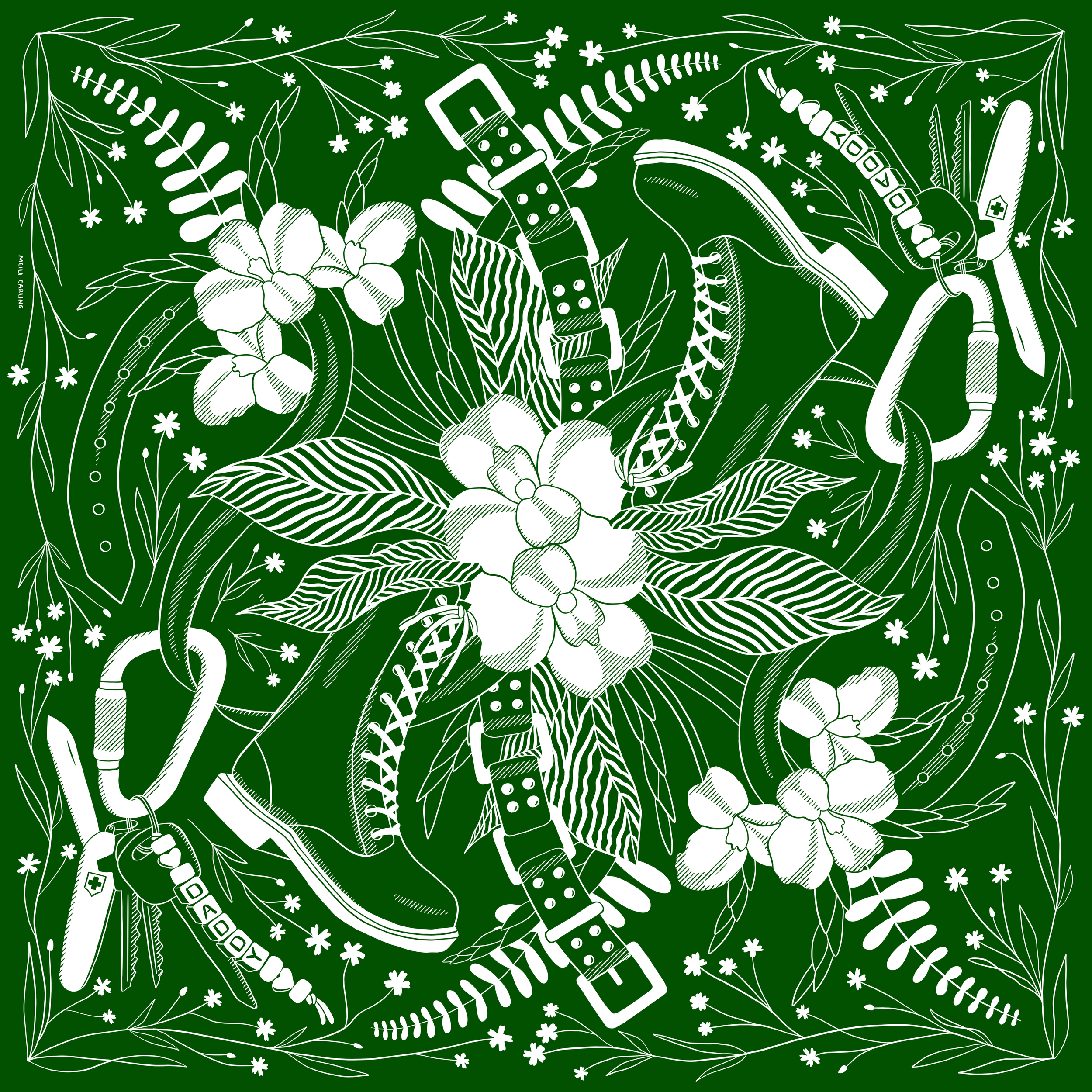
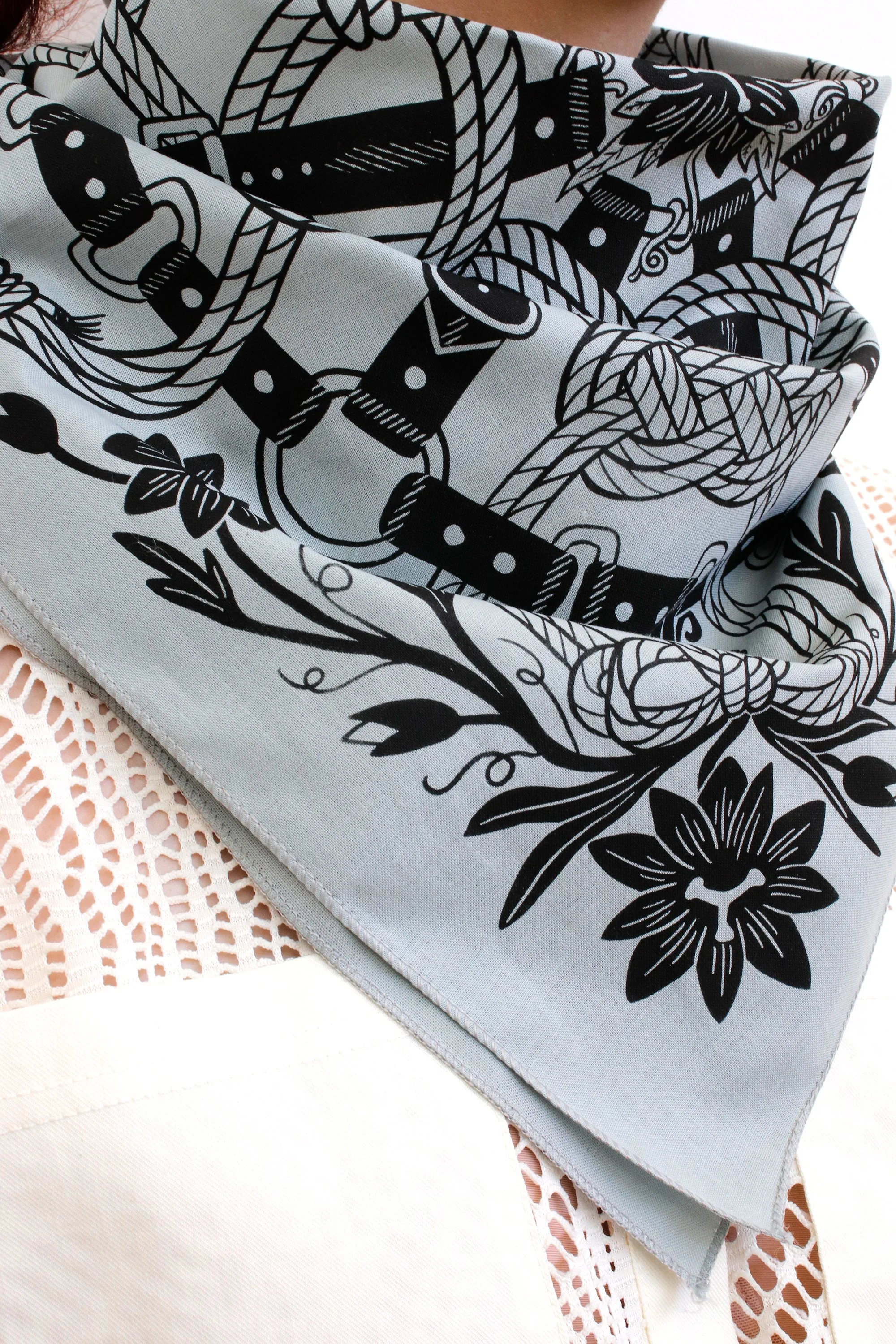
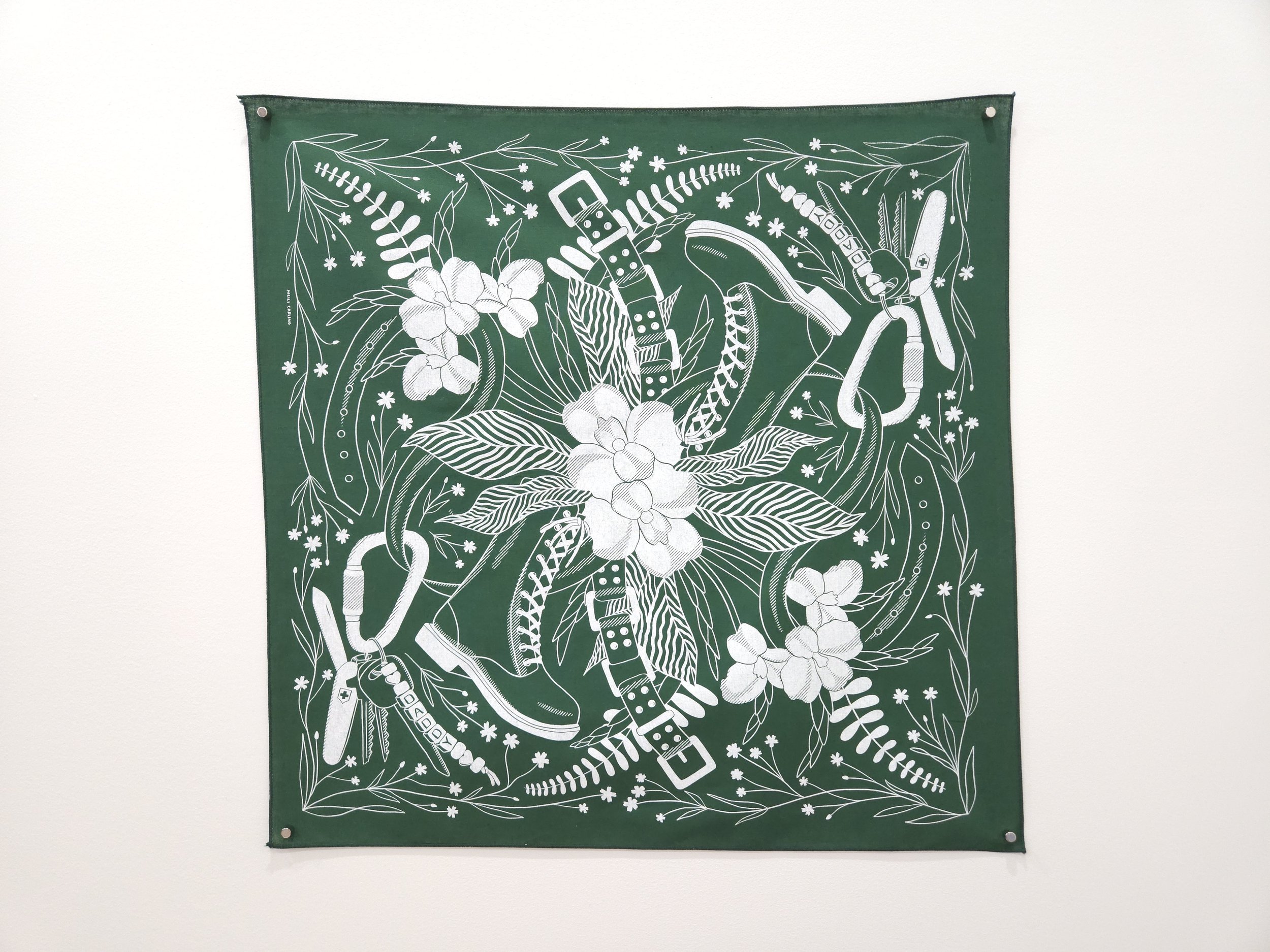
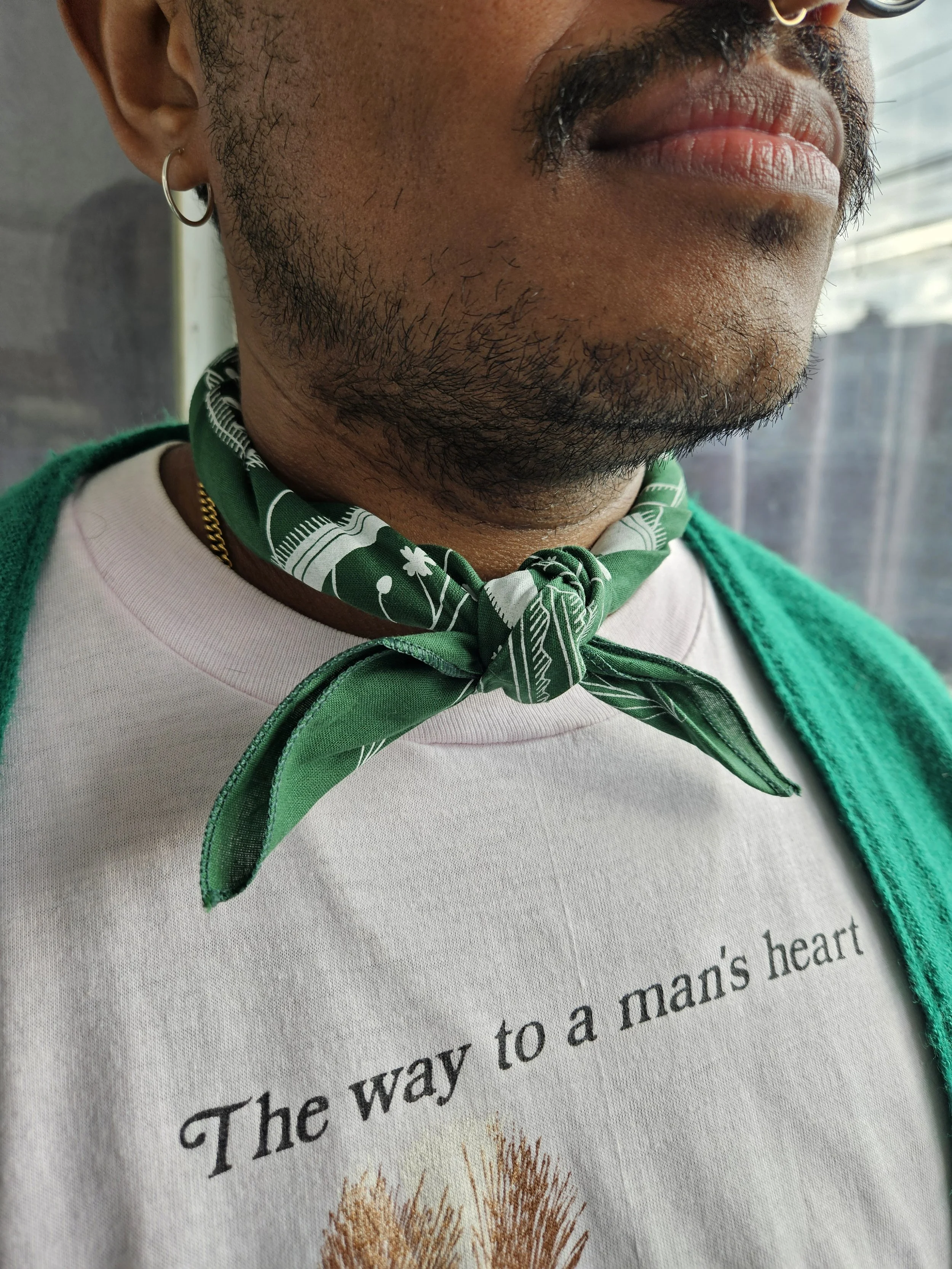
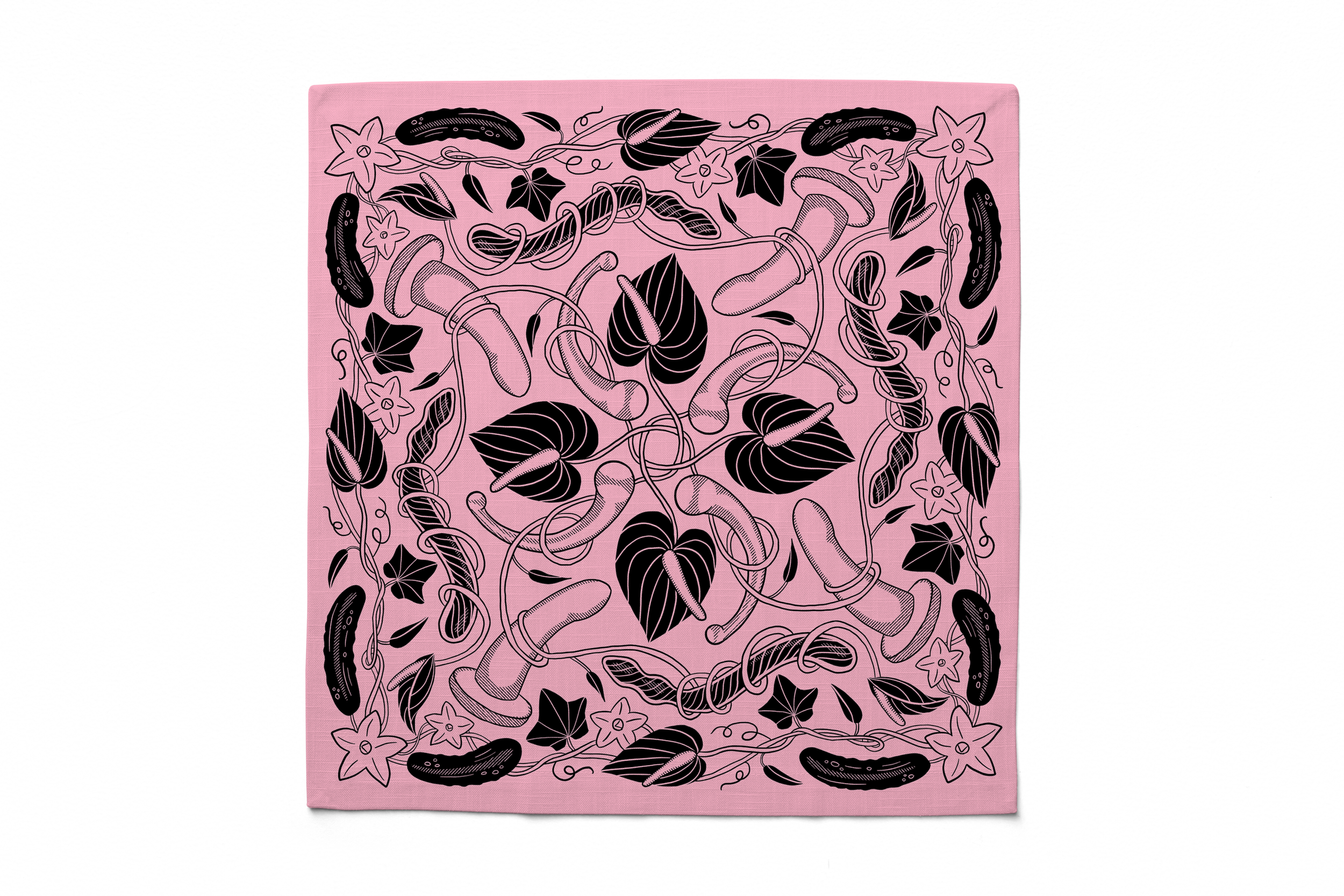
Panky is a series of illustrated, screen printed bandanas I created in homage to hanky code: the queer historic practice of using color-coded handkerchiefs to signal kinks and sexual preferences. Also known as flagging, hanky code emerged among American gay men in the 1970s as a way to cruise for sex without outing themselves to general public. The code began with a handful of colors signaling preferences such as topping and bottoming for anal sex, and has since expanded to include dozens of colors with a wide variety of meanings. A hanky worn in the back left pocket typically indicates a top (active partner), while the right pocket indicates a bottom (passive partner). Today, hanky code is used throughout queer community for both cruising and self-expression. This project originally covered four classic hanky colors: red for fisting, gray for bondage, black for SM, and yellow for watersports (a.k.a. piss). I later expanded the collection to include light pink (dildo play) and hunter green (Daddy kink).
The designs in this project are intentionally rich in visual metaphor, leaning into hanky code as a visual language that both reveals and obscures, depending on who you are. If you know, you know.






Book Design
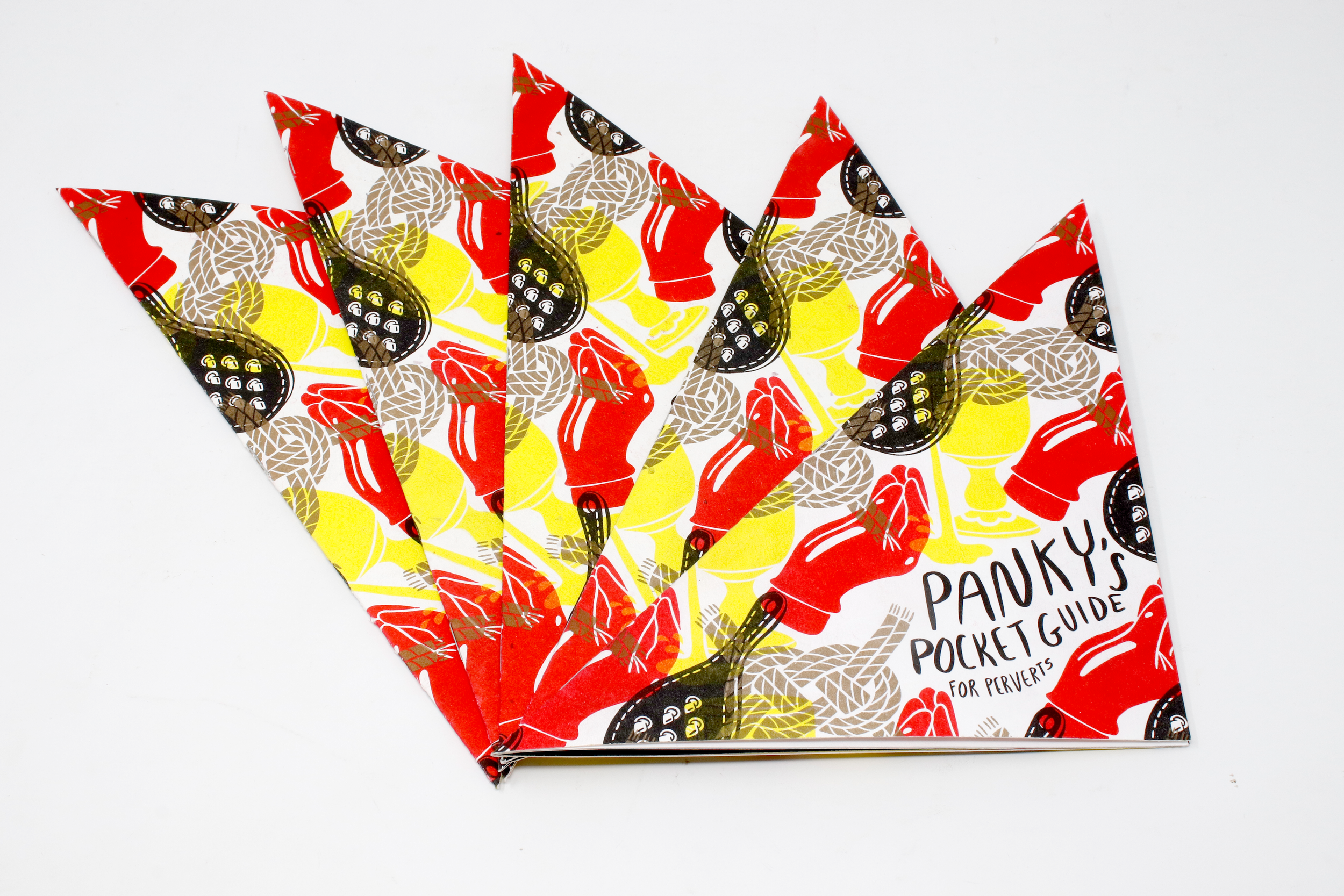
Before I was a designer, I worked several jobs in sex education. First I was an abortion counselor, and later a sex educator and workshop teacher at a feminist sex toy shop in New York City. Drawing on this background, I created a risograph-printed book that serves as an accompanying educational resource to the hankies I designed. The book explains the history of hanky code, the meaning behind each of the featured colors, and information on how to safely practice each of the kinks covered in the project.